Routine air conditioning (AC) maintenance involves more than just checking refrigerant levels and replacing air filters. One critical yet often overlooked component is the condensate drain line. The drain line plays a vital role in removing moisture that accumulates during the cooling process. When neglected, clogged drain lines can cause water damage, mold growth, system shutdowns, and reduced efficiency.
Regular drain line cleaning is essential to maintaining optimal AC performance, protecting property, and preventing costly repairs. This article explores why drain line maintenance is a crucial part of routine AC servicing.
Understanding the Function of the AC Drain Line
During the cooling process, warm indoor air passes over cold evaporator coils. This causes moisture to condense and drip into the condensate pan. The drain line carries this water safely away from the system.
Key Functions of the Drain Line
- Removes condensation from evaporator coils
- Prevents water accumulation inside the unit
- Protects internal components from moisture damage
- Reduces humidity levels indoors
If the drain line becomes blocked, water can back up into the system or overflow into surrounding areas.
Common Causes of Drain Line Clogs
Over time, debris and contaminants can accumulate inside the drain line.
Frequent Causes of Blockages
- Dust and dirt buildup
- Mold and algae growth
- Rust particles
- Sludge accumulation
- Insect nests or debris
| Cause | Impact on System |
|---|---|
| Algae Growth | Slow drainage |
| Dirt Accumulation | Complete blockage |
| Mold Formation | Air quality concerns |
| Rust Debris | Restricted water flow |
Without regular cleaning, even minor buildup can escalate into major problems.
Preventing Water Damage
One of the most serious risks of a clogged drain line is water damage.
Potential Consequences
- Ceiling stains
- Wall damage
- Floor warping
- Structural deterioration
- Electrical system damage
Water overflow from a blocked drain line can lead to costly property repairs and insurance claims.
Protecting Indoor Air Quality
Standing water in the drain pan or clogged lines can promote mold and bacterial growth.
Air Quality Risks
- Mold spores circulating in indoor air
- Musty odors
- Increased allergy symptoms
- Respiratory irritation
Routine drain line cleaning helps maintain a healthier indoor environment.
Avoiding System Shutdowns
Modern AC systems often include safety switches that shut the system down when water levels rise to prevent damage.
Benefits of Cleaning
- Prevents unexpected shutdowns
- Ensures uninterrupted cooling
- Reduces emergency service calls
- Maintains comfort levels
| Issue | Result Without Cleaning | Result With Cleaning |
|---|---|---|
| Water Backup | System shutdown | Continuous operation |
| Mold Growth | Poor air quality | Cleaner airflow |
| Pan Overflow | Property damage | Proper drainage |
Regular maintenance ensures stable system performance.
Improving Energy Efficiency
Clogged drain lines can indirectly affect overall system efficiency.
Efficiency Impacts
- Increased humidity levels
- Overworked compressor
- Longer cooling cycles
- Higher energy consumption
Proper drainage supports balanced humidity control and optimized cooling.
Extending Equipment Lifespan
Moisture buildup can corrode internal components and cause premature wear.
Long-Term Equipment Protection
- Prevents rust formation
- Reduces strain on evaporator coils
- Minimizes electrical component damage
- Protects insulation materials
Routine cleaning extends the operational lifespan of HVAC systems.
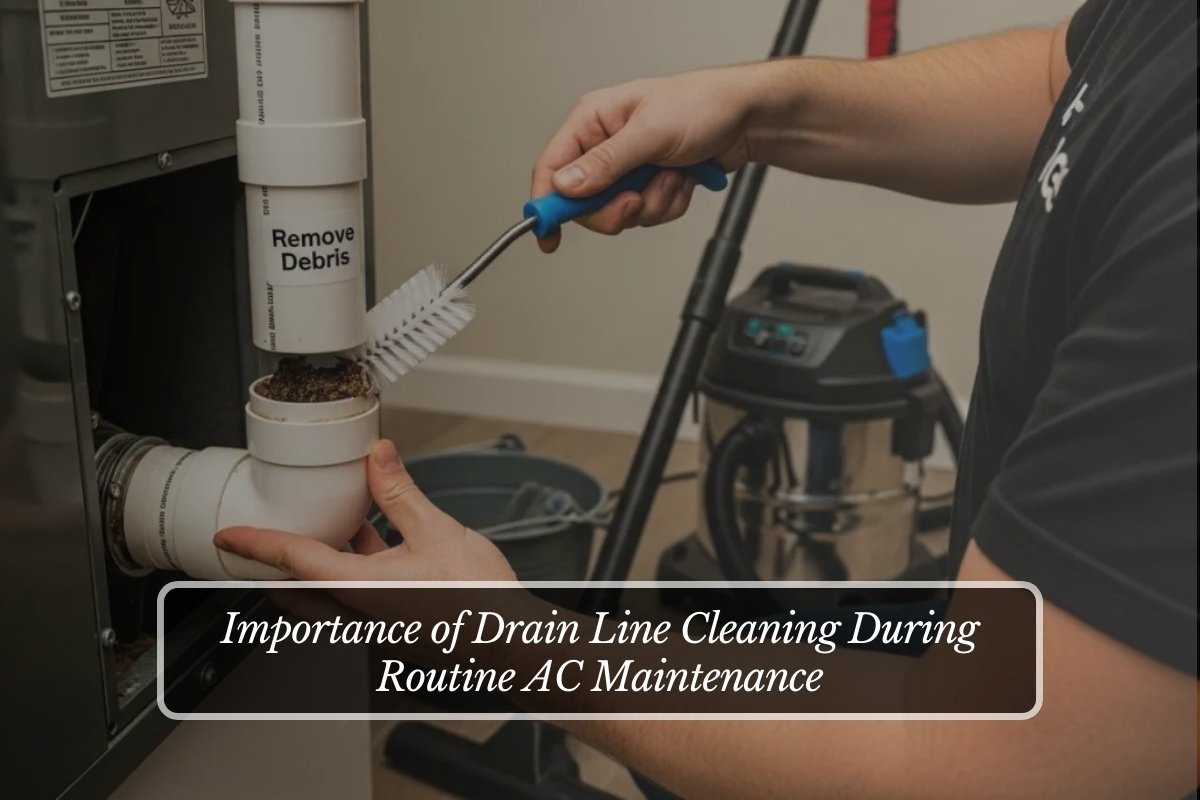
Professional Drain Line Cleaning Process
HVAC technicians use specialized tools and procedures during routine maintenance.
Typical Cleaning Steps
- Inspect drain pan and line
- Flush line with cleaning solution
- Use vacuum equipment to remove debris
- Check for leaks or cracks
- Test drainage flow
Professionals may also install algae tablets or preventive treatments.
DIY Maintenance Tips for Homeowners
While professional servicing is recommended, homeowners can take simple preventive steps.
Basic Preventive Actions
- Pour diluted vinegar into the drain line periodically
- Check for visible clogs
- Monitor drain pan for standing water
- Replace air filters regularly
- Keep the surrounding area clean
However, persistent clogs require professional attention.
Frequency of Drain Line Cleaning
Cleaning frequency depends on system usage and environmental conditions.
Recommended Schedule
- At least once per year during routine maintenance
- More frequently in humid climates
- Twice annually for heavy system use
- Immediately if signs of blockage appear
Preventive cleaning is far more cost-effective than emergency repairs.
Warning Signs of a Clogged Drain Line
Recognizing early symptoms prevents larger issues.
Common Indicators
- Water pooling near indoor unit
- AC unit shutting off unexpectedly
- Musty odors
- Visible mold growth
- Dripping water sounds
Prompt action can prevent structural damage and expensive repairs.
Cost Savings Through Preventive Maintenance
Ignoring drain line maintenance often leads to higher repair costs.
Financial Benefits of Routine Cleaning
- Avoided water damage repairs
- Reduced mold remediation expenses
- Fewer emergency service visits
- Lower energy bills
- Extended system lifespan
Proactive maintenance protects both equipment and property investment.
FAQs
Q. Why is AC drain line cleaning important?
It prevents water backups, mold growth, system shutdowns, and potential property damage.
Q. How often should an AC drain line be cleaned?
At least once annually during routine maintenance, or more frequently in humid climates.
Q. Can a clogged drain line cause the AC to stop working?
Yes, many systems shut down automatically to prevent water damage when drainage is blocked.
Q. Is drain line cleaning expensive?
No, it is typically an affordable preventive service compared to the cost of water damage repairs.
Q. Can homeowners clean the drain line themselves?
Basic maintenance can be done at home, but persistent clogs should be handled by a professional technician.