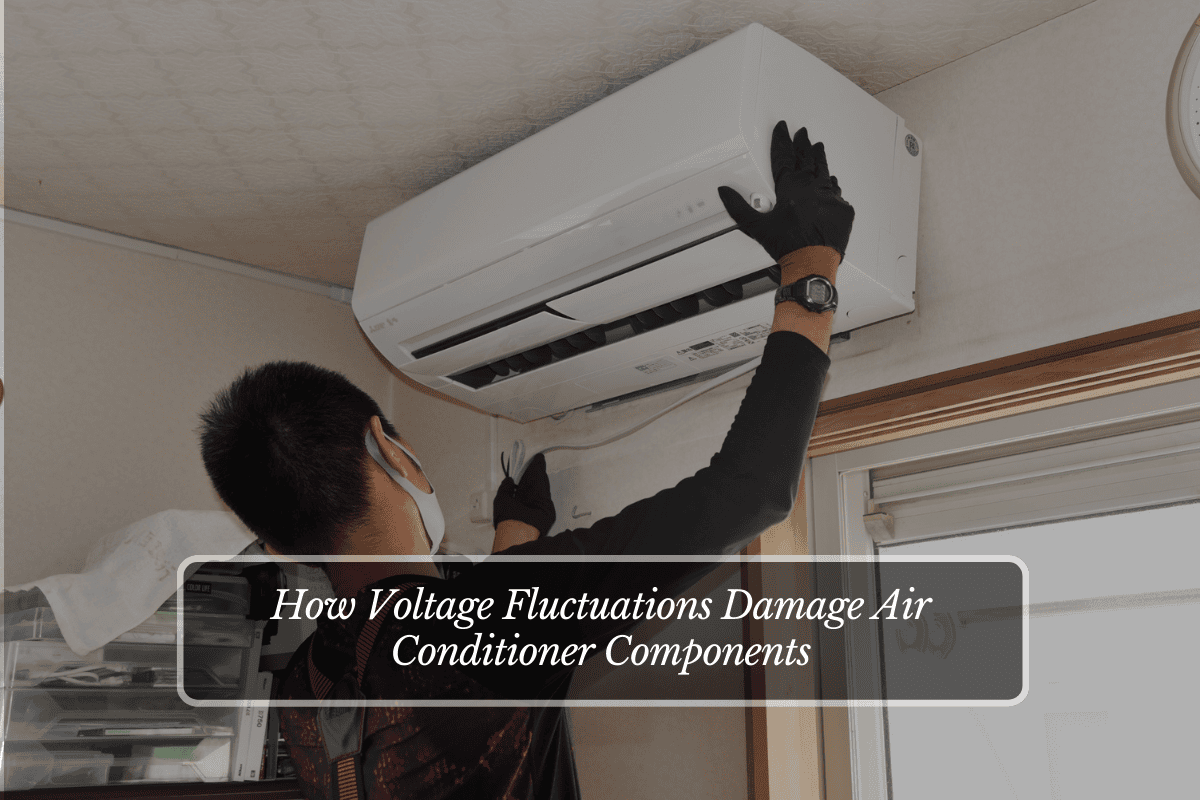
Voltage fluctuations—surges above 120V or sags below 110V on standard US 120V circuits—stress air conditioner components by disrupting electrical balance, leading to overheating, premature wear, and outright failures. These power inconsistencies, common in rural areas or during peak grid demand, cut efficiency, hike bills by 10-20%, and shorten system life from 15-20 years.
Compressor Vulnerability
The compressor, AC’s “heart,” demands steady voltage to compress refrigerant. Low voltage (<110V) forces it to draw excess amps (up to 30% more) for startup torque, overheating windings and insulation—risking burnout in “brownout” scenarios. High surges (>130V) fry seals or valves via arcing.
Prolonged sags cause “hard starts,” where capacitors strain; repeated cycles degrade oil lubrication, leading to $1,500-3,000 replacements. Inverter models tolerate ±10% better but still falter beyond.
Capacitor and Motor Damage
Start/run capacitors boost motors; fluctuations weaken electrolyte, causing bulging/failure—symptom: humming without startup. Fan motors overheat similarly, reducing airflow 20-40% and icing coils.
Surges spike voltage across windings, melting enamel; low voltage stalls rotors, drawing locked-rotor amps (LRA, 5-8x normal) briefly but cumulatively damaging bearings.
Control Board and Electronics
Printed circuit boards (PCBs) in modern ACs handle sensors/relays; surges burn traces/chips, while brownouts cause erratic signals—e.g., false defrost cycles or short-cycling (on/off every 5 mins). Variable-speed units suffer most, as inverters misread power.
Repair: $300-800 boards; symptoms include blinking lights, no response to thermostat.
Refrigerant and Coil Stress
Indirect hits: poor motor speed alters refrigerant flow, starving evaporator (low suction pressure) or flooding condenser. Fluctuations cycle systems abnormally, stressing TXVs or cap tubes—leaks develop over time.
Efficiency drops: SEER falls 15% under swings, raising kWh as compressor slips RPM.
Signs of Fluctuation Damage
Lights dimming on startup, frequent breaker trips, unusual noises (clicking/humming), warm air despite running, or error codes (e.g., E7 low voltage). Bills rise without temp changes; multimeter confirms <110V/ >130V at unit.
Protection Strategies
Voltage stabilizers (130-280V range) or hard-start kits buffer sags/surges for $100-300. UPS/surge protectors guard electronics; whole-home conditioners for chronic issues. Pros check LRA via amp clamp; upgrade wiring (10-12 AWG dedicated circuits).
Inverter ACs self-regulate ±15V; select 14+ SEER models. Monitor via smart plugs alerting swings.
Long-Term Prevention and Costs
Annual inspections test under load; grid-tied solar smooths peaks. Damage escalates: minor $200 fixes snowball to $5K full swaps. Stable power yields 10-15% savings, even cooling.
Rural US grids (storms, long runs) amplify risks—stabilizers pay ROI in one season.
FAQs
Q. Main victim of low voltage?
Compressor: draws excess amps, overheats windings—$1,500+ fix.
Q. High voltage risks?
Surges burn capacitors/boards; arcing damages seals.
Q. Inverter AC safer?
Yes, tolerates ±10-15%; still needs stabilizers for extremes.
Q. Detection signs?
Dim lights on start, short-cycling, humming, error codes.
Q. Best protection?
Stabilizers (130-280V), dedicated circuits, hard-start kits.