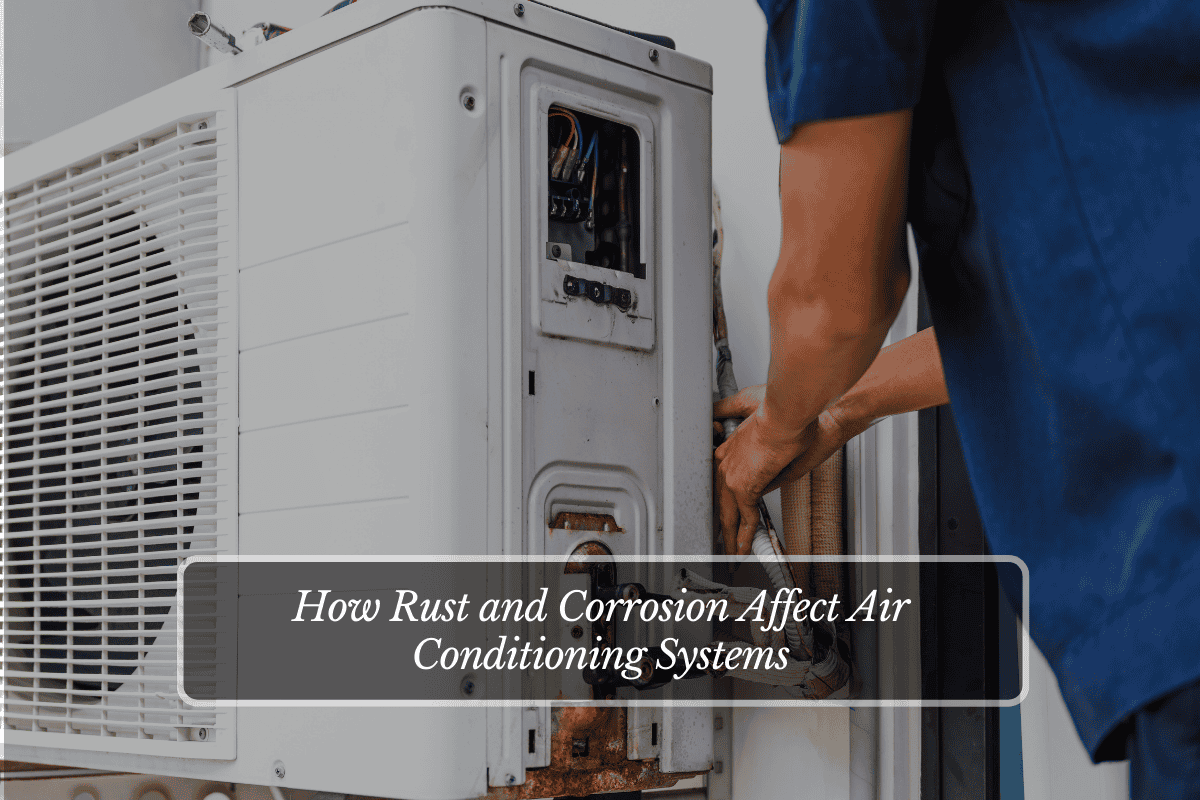
Rust and corrosion significantly degrade air conditioning systems by impairing efficiency, raising energy costs, and shortening lifespan. These issues primarily affect outdoor condenser coils and fins, where moisture and contaminants accelerate metal breakdown.
Causes of Rust Formation
Moisture from rain, condensation, or high humidity reacts with oxygen and metals like steel or copper in coils, forming iron oxide (rust). Coastal salt air, lawn fertilizers, or industrial pollutants worsen corrosion, while clogged drain pans cause standing water overflow. Aging units (10+ years) lose protective coatings, inviting faster deterioration.
Impact on Cooling Efficiency
Rust creates an insulating layer on coils, blocking heat transfer between refrigerant and air, so the system struggles to cool effectively. Fins bend or clog, restricting airflow and forcing fans to work harder, which spikes energy use by 10-30%. Indoor evaporator coils may ice over from low refrigerant due to pinhole leaks in corroded lines.
System Strain and Failures
Overworked compressors overheat and burn out prematurely, often requiring full unit replacement over $5,000. Reduced airflow strains blowers, while leaks drop refrigerant levels, triggering shutdowns or poor performance. In humid climates, unchecked rust spreads indoors, fostering mold growth.
Long-Term Structural Damage
Corrosion thins metal, weakening coils and frames against wind or debris; severe cases collapse components. Lifespan drops from 15-20 years to under 10, with repair costs compounding annually. For construction pros maintaining community buildings, this underscores regular inspections.
Prevention Strategies
Annual professional cleanings remove debris and apply coil coatings; elevate units 4-6 inches on pads to avoid puddles. Use rust-inhibiting paints or galvanized covers; install UV filters for VOC protection. In salty areas, rinse monthly with fresh water.
FAQ
1. Does minor surface rust harm AC units?
Yes, it spreads and reduces efficiency quickly.
2. How much does rust raise energy bills?
Up to 30% from poor heat transfer.
3. Can I fix rust myself?
Clean lightly, but pros handle coatings and repairs.
4. Why coastal ACs rust faster?
Salt accelerates oxidation.
5. When to replace a rusty unit?
If coils pit deeply or efficiency drops 20%+.