When an air conditioner stops working or begins underperforming, time becomes a critical factor—especially during peak heat. While quick fixes and guesswork may seem faster, they often lead to repeated repairs, extended downtime, and higher costs. Professional diagnosis streamlines the repair process by identifying the true root cause early, allowing technicians to resolve problems efficiently and accurately.
Eliminating Guesswork From the Start
One of the biggest time drains in AC repairs is trial-and-error troubleshooting. Without proper diagnostics, technicians may replace parts based on symptoms rather than causes, only to discover the problem persists.
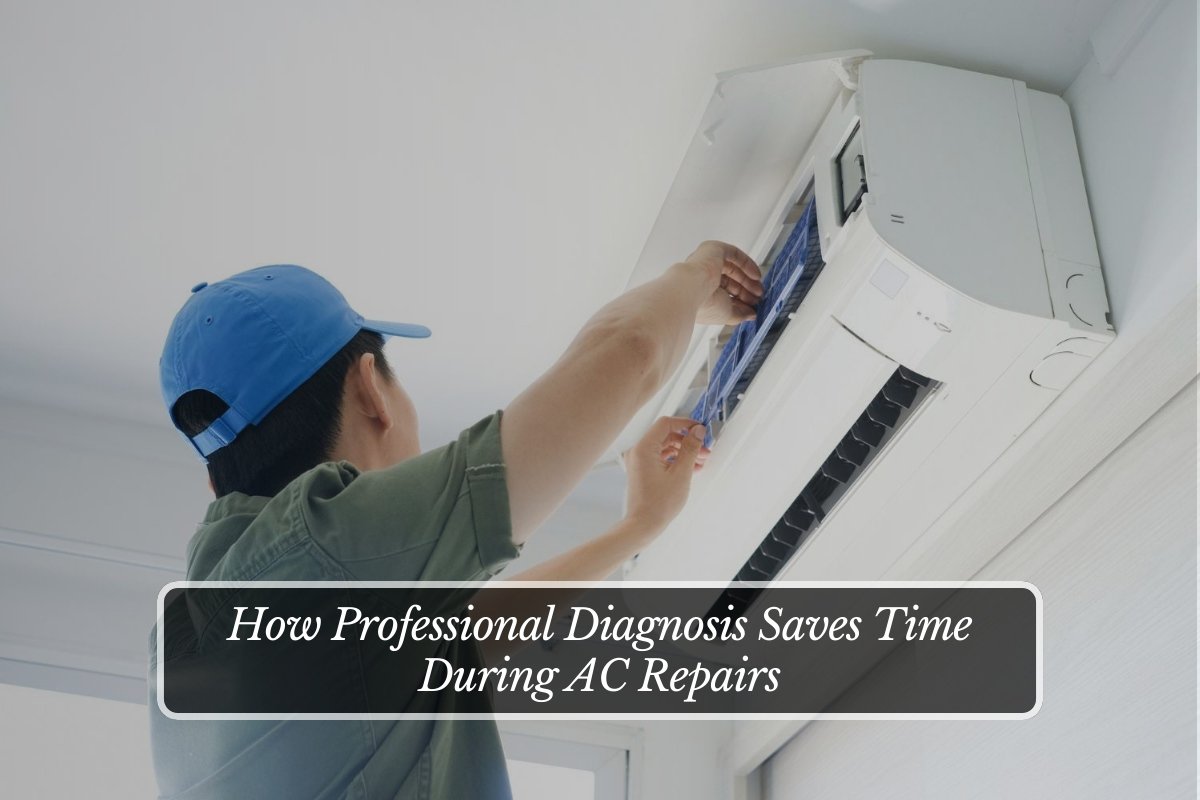
Professional diagnosis uses systematic testing to pinpoint failures. By measuring refrigerant pressures, electrical values, airflow, and temperature differentials, technicians quickly narrow down the issue. This targeted approach avoids unnecessary part swaps and repeat visits.
Identifying Root Causes, Not Just Symptoms
Many AC issues share similar symptoms. Poor cooling, for example, can be caused by low refrigerant, dirty coils, airflow restrictions, electrical faults, or control issues. Treating the symptom without identifying the cause wastes time and prolongs discomfort.
Professional diagnosis connects symptoms to underlying problems. By understanding why the system failed—not just how—it ensures repairs address the real issue the first time.
Speeding Up Parts Selection and Repair Planning
Accurate diagnosis directly affects repair speed. Once the exact problem is identified, technicians know precisely which components are required and how extensive the repair will be.
This clarity reduces delays caused by ordering incorrect parts or discovering additional issues mid-repair. In many cases, professional diagnosis allows repairs to be completed in a single visit rather than multiple appointments.
Preventing Secondary and Repeat Failures
Misdiagnosed AC repairs often lead to repeat breakdowns. A system may run briefly after a superficial fix, only to fail again because the underlying issue was never resolved.
Professional diagnosis identifies related stress points and secondary damage early. Addressing these at the same time prevents cascading failures that would otherwise cause additional downtime and repeated service calls.
Reducing System Downtime During Peak Demand
During heat waves, AC systems are under maximum load—and service availability is limited. Fast, accurate diagnosis minimizes the time a system remains offline.
Instead of extended troubleshooting while the home continues to heat up, professional diagnostics shorten the path from problem identification to solution. This is especially valuable when comfort and safety are at stake.
Improving Communication and Decision-Making
Professional diagnosis also saves time by improving communication between technicians and homeowners. Clear explanations of the issue, repair options, and expected outcomes allow faster decisions without confusion or hesitation.
When homeowners understand the problem and trust the diagnosis, approvals happen quickly and repairs move forward without delay.
Supporting Long-Term System Reliability
Time saved today also prevents time lost tomorrow. Professional diagnosis often reveals early-stage issues that could cause future failures. Addressing these proactively reduces the likelihood of emergency repairs later.
This forward-looking approach turns one service visit into a longer period of reliable operation, saving time over the entire lifespan of the system.
FAQs
Why does professional diagnosis take less time than basic troubleshooting?
Because it uses precise testing and experience to identify the exact issue instead of relying on trial and error.
Can diagnosis really prevent repeat AC repairs?
Yes. Fixing the root cause prevents the same problem—or related failures—from recurring.
Does professional diagnosis increase repair costs?
In most cases, it reduces total costs by avoiding unnecessary parts, repeat visits, and prolonged downtime.
How long does a professional AC diagnosis usually take?
Typically 30–90 minutes, depending on system complexity and symptoms.
Is diagnosis still useful if the AC problem seems obvious?
Yes. Even obvious symptoms can have hidden causes that only proper diagnostics can confirm.